
NASA launched a spacecraft called Lucy on a 12-year mission to explore Jupiter’s Trojan asteroids for the first time on Saturday, gathering new insights into the solar system’s formation.
The Atlas V rocket responsible for propelling the probe took off at 5:34 am local time (0934 GMT) from Cape Canaveral.
Named after an ancient fossil of a pre-human ancestor, Lucy will become the first solar-powered spacecraft to venture so far from the Sun, and will observe more asteroids than any probe before it — eight in all.
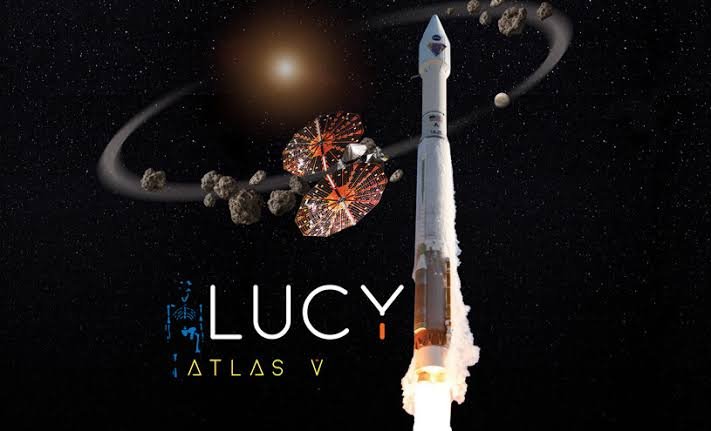
Lucy will also make three Earth flybys for gravity assists, making it the first spacecraft to return to our planet’s vicinity from the outer solar system.
“Each one of those asteroids, each one of those pristine samples, provide a part of the story of the solar system, the story of us,” Thomas Zurbuchen, associate administrator of NASA’s Science Mission, told reporters on a…
View original post 368 more words
 BLOGSTOCK